
Lexington · Commercial Real Estate
Nicholasville Road Corridor Commercial Property
The busiest retail address in Lexington — and the trade-offs that come with it.
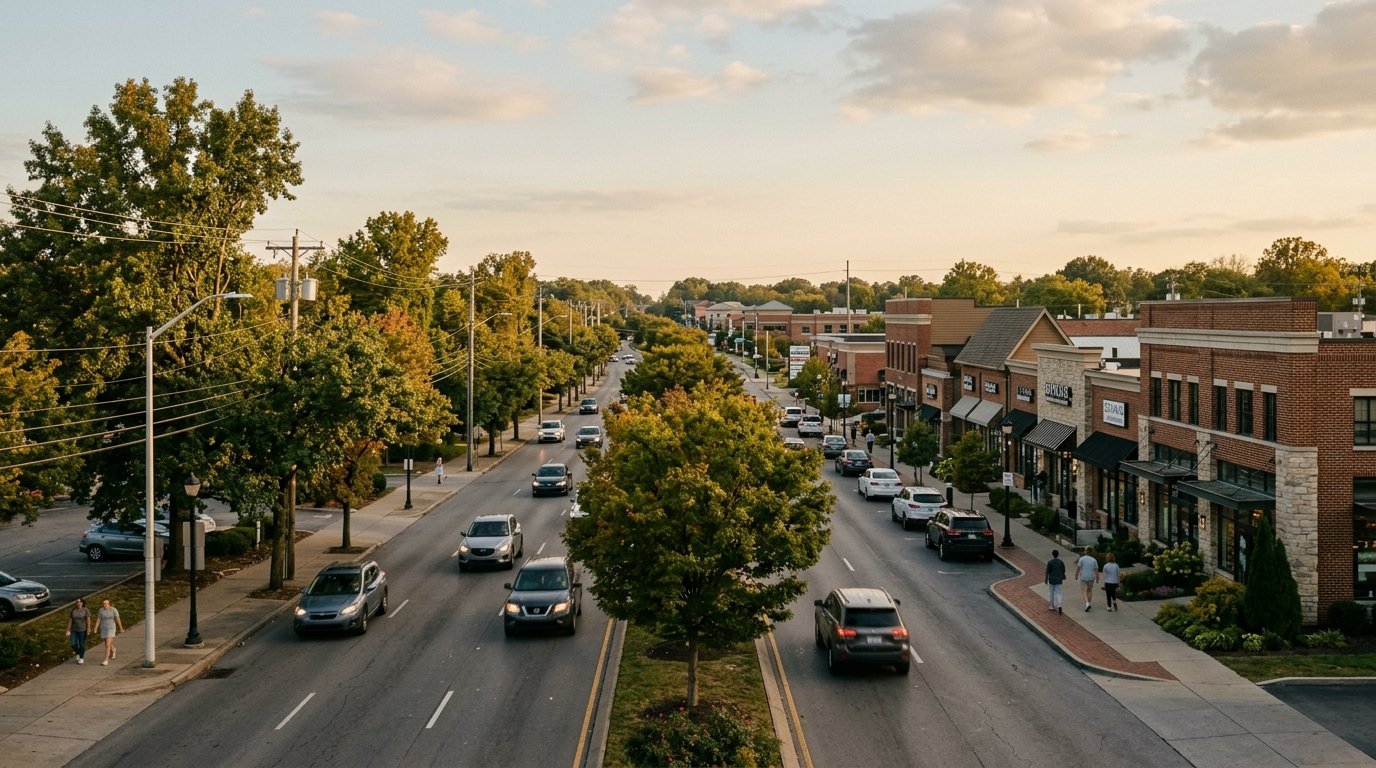
Nicholasville Road — US 27 — is Lexington’s retail spine, running south from near the University of Kentucky campus toward the Jessamine County line, past Lexington Green, Fayette Mall, and The Summit at Fritz Farm. It is among the busiest corridors in the city, which is both its value and its friction: enormous drive-by exposure, real congestion, and almost no raw land left. Most opportunity here is redevelopment, not new ground. Current figures live in The Corridor Report.
Why is Nicholasville Road Lexington’s retail spine?
US 27 south of downtown collects three of the city’s defining retail addresses in a few miles: Lexington Green, Fayette Mall, and The Summit at Fritz Farm near Man o’ War Boulevard. Between and around them runs nearly every retail format Lexington has — power centers, strip retail, restaurants, auto, banking, and medical. The corridor also feeds the University of Kentucky area at its north end and Jessamine County’s growth at its south. For retail users, it is the default first question: can you afford to be on Nicholasville Road, and do you need to be?
What does congestion actually cost a business here?
Traffic is the corridor’s currency and its tax. High counts mean exposure, but they also mean peak-hour friction, difficult left turns, and medians that quietly cut a site’s true catchment in half. A location on the going-home side of the road with a full signal performs differently from the same building across the street. Before falling for a traffic count, drive the site at 5:15 on a Tuesday and try to turn in. I walk buyers through this in due diligence — access is a fact you verify, not a feeling.
The busiest retail address in Lexington — and the trade-offs that come with it.
Redevelopment or new build — which is realistic?
The corridor is essentially built out; vacant ground inside the city on US 27 is rare, and most of what trades is improved property with a past life. That makes the real decision second-generation space versus teardown-and-rebuild: re-tenanting an existing shell is faster and cheaper, while redevelopment buys you a building shaped to your use at the cost of time, approvals, and construction risk. New ground-up work tends to push south toward the county line. If you are weighing land at all, start with commercial land fundamentals. Redevelopment and zoning questions along the corridor run through the LFUCG Division of Planning.
How do the corridor’s nodes differ from each other?
Treat Nicholasville Road as several markets wearing one name. The Fayette Mall node trades on regional draw; The Summit at Fritz Farm is a newer open-air format with a different tenant profile; Lexington Green sits closer to New Circle Road with its own character; and the stretches between them are workhorse strip and freestanding retail. Asking rents and sale prices shift meaningfully from node to node — which is exactly why I track them separately in The Corridor Report rather than quoting a single corridor number that would mislead you.
What should a buyer verify before committing here?
Three things repay obsession on this corridor. Access: curb cuts, signal position, median breaks, and any Kentucky Transportation Cabinet plans that could change them. Parking: many older centers carry cross-parking easements that bind or benefit your parcel. And zoning: most frontage is commercially zoned, but permitted uses and setbacks vary — confirm the specific classification with LFUCG via the zoning guide. Then structure the purchase so your contingencies cover what you have not yet proven.
Common Questions
Is high traffic always worth the premium?
No. Traffic converts to revenue only when customers can reach you conveniently and your use captures passing demand. Destination uses — medical, professional services, specialty — often perform just as well one block off the spine at meaningfully lower cost. Impulse and convenience uses justify the frontage premium. Match the site to how your customers actually arrive.
What is second-generation space?
Space previously built out for another tenant — a former restaurant, bank, or shop — that you adapt rather than build new. On a built-out corridor like Nicholasville Road it is most of the inventory. The advantage is speed and lower cost; the caution is inherited layout, systems age, and whether the previous use left the site with a reputation or restrictions.
How far does the corridor run?
Commercially, from the University of Kentucky area south past New Circle Road, Lexington Green, Fayette Mall, and Man o’ War Boulevard at The Summit at Fritz Farm, continuing toward the Jessamine County line — where the market gradually hands off to Nicholasville itself. Character and pricing shift several times along the way, which is why node matters more than address.
Compare the spine with Hamburg’s interchange retail, or get current corridor figures in The Corridor Report.
Marcos Gil, REALTOR® · Keller Williams Commonwealth · Commercial real estate across Lexington and Central Kentucky · Also owner of Central Property Services and publisher of Invest in the Gorge — any recommendation involving my other businesses is disclosed in writing.
Request the Commercial List
Last updated: August 14, 2026