
Lexington · Commercial Real Estate
Industrial & Warehouse Property in Lexington, KY
Nobody buys an industrial building for its looks.
Industrial and warehouse property in Lexington is judged on function: clear height, loading configuration, power capacity, and yard space determine what a building can actually do, and therefore what it is worth. Lexington’s industrial market is thin and quiet — much of it trades before it is publicly marketed — which makes a curated search more useful here than anywhere else on this site. Text LIST to (859) 310-1209 with your requirements.
Why is clear height the first number to check?
Clear height — the usable vertical distance below the lowest overhead obstruction — decides how you can rack, stack, and operate. Modern distribution wants tall; light manufacturing and service contractors often need far less. The trap is paying for height you will never use, or worse, buying a building whose ceiling quietly caps your growth. Older Lexington industrial stock tends to run lower than new construction, which is exactly why it can be a value — if your operation genuinely fits under it. Measure to the lowest sprinkler head or joist, not to the deck.
Dock-high or grade-level doors — what does your operation need?
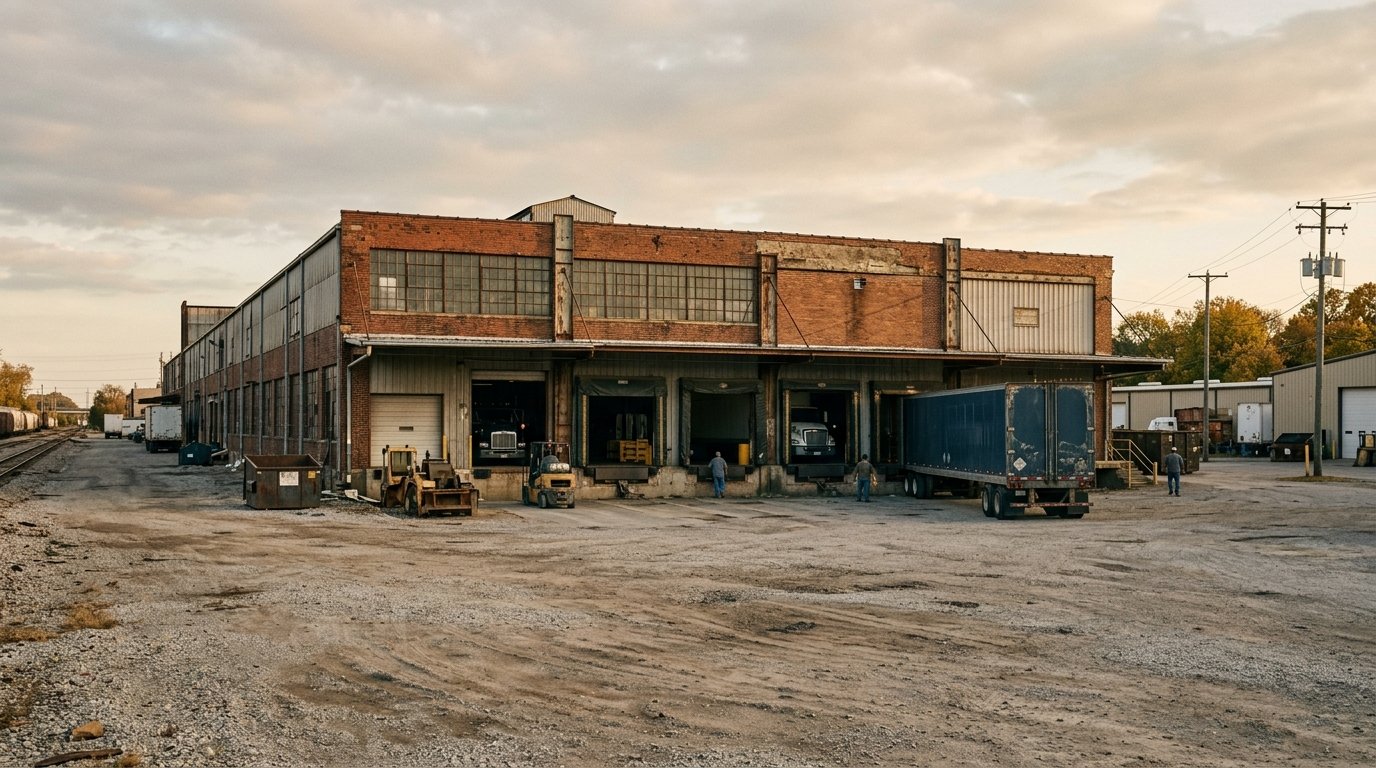
Dock-high doors let semi trailers back up flush for pallet loading; grade-level doors let vehicles and forklifts drive straight in. Distribution businesses live on docks; contractors, service fleets, and anyone loading vans and box trucks usually want grade-level. Many of the best small industrial buildings have both. Count the doors, note their heights and condition, and picture your actual daily loading pattern against them. Retrofitting docks into a grade-level building means excavation and site work — possible, but it should be priced before you offer, not discovered after.
Nobody buys an industrial building for its looks.
Is the electrical service enough for what you do?
Power is the least visible and most expensive surprise in industrial buying. Confirm the service size and voltage, and whether three-phase power — which most serious equipment requires — is present or merely available at the street. Bringing heavier service into a building involves the utility, an electrician, and real money and time. Have an electrician verify the panel and service entrance during due diligence; do not rely on the listing sheet. A building that fits your racks but not your machines is the wrong building.
How much is yard space actually worth?
Often more than the square footage suggests. Fenced, stabilized yard — for trailers, equipment, materials, fleet parking — is scarce in Lexington because land inside the Urban Service Boundary is tight, and outdoor storage is restricted in many zones. If your operation needs a yard, verify two things: that the zoning actually permits outdoor storage for your use, and that the yard drains and bears weight in wet months. The zoning guide covers how to confirm permitted uses before you commit.
Owner-user or investor — how does the calculus differ?
An owner-user buys function: the right height, doors, power, and yard for the operation, in a location that works for employees and freight. An investor buys the lease and the tenant’s durability — industrial has been a favored asset class precisely because tenants stay put when moving means relocating racking and equipment. The same building can be right for one and wrong for the other. The investment property page covers how the numbers get analyzed; either way, the curated list is where the search starts.
Common Questions
Why is so little industrial property listed publicly in Lexington?
Because the market is thin and owners know it. Functional industrial buildings inside the Urban Service Boundary are scarce, so when owners decide to sell, a quiet call to a broker often finds a buyer before a listing is ever written. That is the strongest argument for being on a watch list: you hear about property when it becomes available, not after it has traded.
Can I convert a warehouse to another use?
Sometimes — subject to zoning first and building code second. Industrial zones such as I-1 permit a specific range of uses, and a change of use can trigger code requirements around parking, fire separation, and accessibility. Confirm the zoning with LFUCG and consult a land-use professional before assuming a conversion pencils. Education only here — verify before you buy. Zoning for a specific parcel can be confirmed with the LFUCG Division of Planning.
What size industrial building should a small contractor buy?
Buy for the operation you will run in three to five years, not the one you run today — moving an industrial operation is expensive and disruptive. That said, oversizing has a real carrying cost. Many contractors solve it with a building slightly larger than current needs plus yard space, leasing back excess bay space until they grow into it.
If the search starts with dirt instead of a building, read the commercial land page; if the building is purely an investment, start with how commercial returns are analyzed.
Marcos Gil, REALTOR® · Keller Williams Commonwealth · Commercial real estate across Lexington and Central Kentucky · Also owner of Central Property Services and publisher of Invest in the Gorge — any recommendation involving my other businesses is disclosed in writing.
Request the Industrial List
Last updated: August 14, 2026